Security Time Clock from Greer Plant that was owned J.P. Stevens and was used in the 1940s.
A security guard world carry the clock with him for his rounds and had to clock in every hour and some places every half hour. It recorded his actions on the job
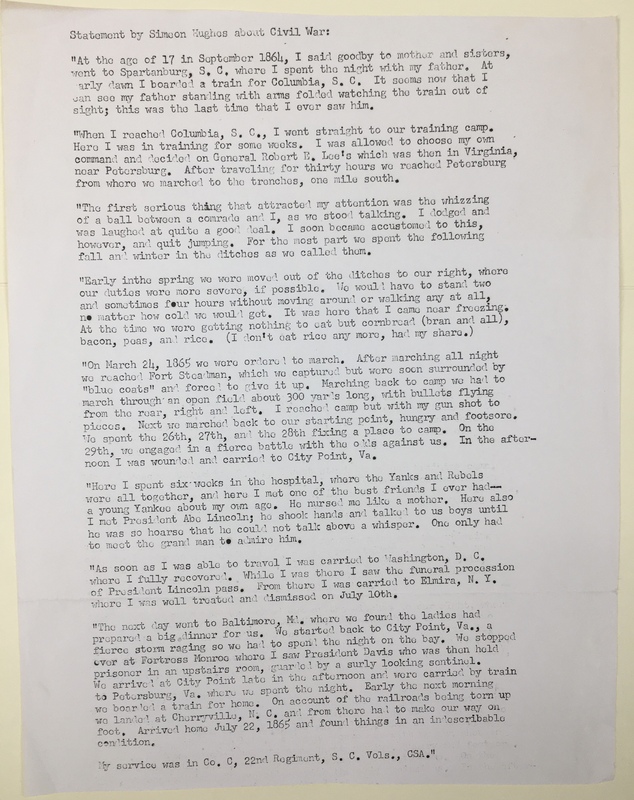
Drawknife was used by Simeon when he started farming when he returned home from war and thought to belong to his father who was a farmer. The knife was used for shaving logs
Scythe was used by Simeon Hughes when he started farming in 1865 after he returned home from war and thought to have belonged to his father who was a farmer
Photograph General Lee and Stonewall Jackson presented by the Benjamin Brockman Chapter of the Children of the Confederacy to the Greer Library on July 16, 1926,
Railroad Signal Lantern was found in the Old Bailey home on West Poinsett Street. W.C Bailey was a railroad agent and used the lantern at work and assumed he was able to keep it
House of Prayer Meeting Program from the Greer Citizen Newspaper.
The program was from Feb 15-16, 1947 advertising a prayer meeting from that Saturday starting at 8 p.m. and going till Sunday with Pastor E.W. Johnson and Bishop C.M. Grace
Built in 1837, this was known as the Arlington Cotton Mill from 1888-1921, when it changed its name to Apalache Mill. It is uncertain what it was named from 1837-1888, though it may well have been Arlington from the beginning.
"Among the first five mills built in the upstate, the Apalache Mill site is the last surviving, and remained active from 1837 to 2007. The 1888 mill was the second brick building on the site and was constructed at the beginning of the modern textile boom in Spartanburg County. The Apalache Mill is also an example of early twentieth century hydroelectric powered textile mill and is important in the industrial development of the rise of electric powered textile mills. It was the first to use a General Electric Company system to provide long distance power to the Victor Mill in Greer, two miles away. Throughout the mill's existence it produced fancy cotton, sheeting, and linen goods. Production continued until 2007, when operation was consolidated in the Greer Mill. The period of significance includes the construction dates of the modern mill and major alteration dates of all contributing buildings and structures, as well as the mill pond, between 1888 and 1946, covering its peak period of development and expansion." — from the National Registry entry.