-
Title
-
Newspaper Clipping: Willie Rowe, February 6, 2013
-
Accession Number
-
2026.38.1.13.1
2026.38.1.13.2
-
Accession Date
-
16 June 2026
-
Accession Creator
-
Meadow Knapp
-
Description
-
The Greer Citizen newspaper clipping of an interview with Willie Rowe
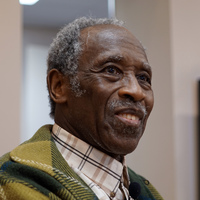
Willie Rowe and Beverly Hazel are pictured alongside
-
Contributor
-
Amanda Bradford
-
Date
-
February 6, 2013
-
Format
-
Small newspaper clipping taped to the main newspaper clipping
-
Storage Location
-
Box 33, Folder #2
-
Text
-
THE GREER CITIZEN
PRESTON BURCH | THE GREER CITIZEN
A LIFETIME OF MEMORIES: Willie Rowe and Beverly Hazel have been married since 1967. Over the past 46 years, they have witnessed many ups and downs in Greer and America.
Rowe has witnessed changes
Since his arrival to Greer
BY AMANDA BRADFORD
STAFF WRITER
Editors Note: In the first of a month-long series celebrating Black History Month and African Ameri-cans who have made an impact in Greer, Amanda Bradford met with for-mer Dixie Shop owner Willie Rowe to discuss his experience as a black en-trepreneur growing up in the South during the civil rights movement.
Willie Rowe was raised in a house located a block from the courthouse in Orangeburg and was the second of six children. After attending Denmark Trade School for a year and a half, he graduated in 1963.
"So two weeks before I was scheduled to gradu-ate, it might have been in December, the placement director said, 'the job you was gonna get in Co-lumbia, it's been take," Rowe said. "God, I guess you could say it was in His plan for me to come to Greer."
Before his job placement here, Rowe had never heard of Greer, but he took a bus to the bus station that Greer once had and began working for James and Frankie Chapman, the owners of the Dixie Shoe Shop at that time.
"In fact, I moved from Sunnyside Street in Or-angeburg to Sunnyside
'God, I guess you could say it was in His plan for me to come to Greer.'
Willie Rowe
Drive in Greer, that's un-usual. But even in both places everyone was real good to me," Rowe said.
Rowe admits things were different then, and there were times when people treated him differently. He said he would never forget when he worked cutting grass for people and how one person he worked for wouldn't talk to him.
"You was able to grow past that cause there was things," Rowe said. "It wasn't a harsh feeling on my part, it was just life at that particular point."
At one point, Rowe worked as a carhop and said he would notice how sometimes a family wouldn't get out of their car. In another instance he was turned away at a movie.
"I have gotten in line with my car to go see a movie, and then it was a long time before the movie started.
SEE ROWE | A6